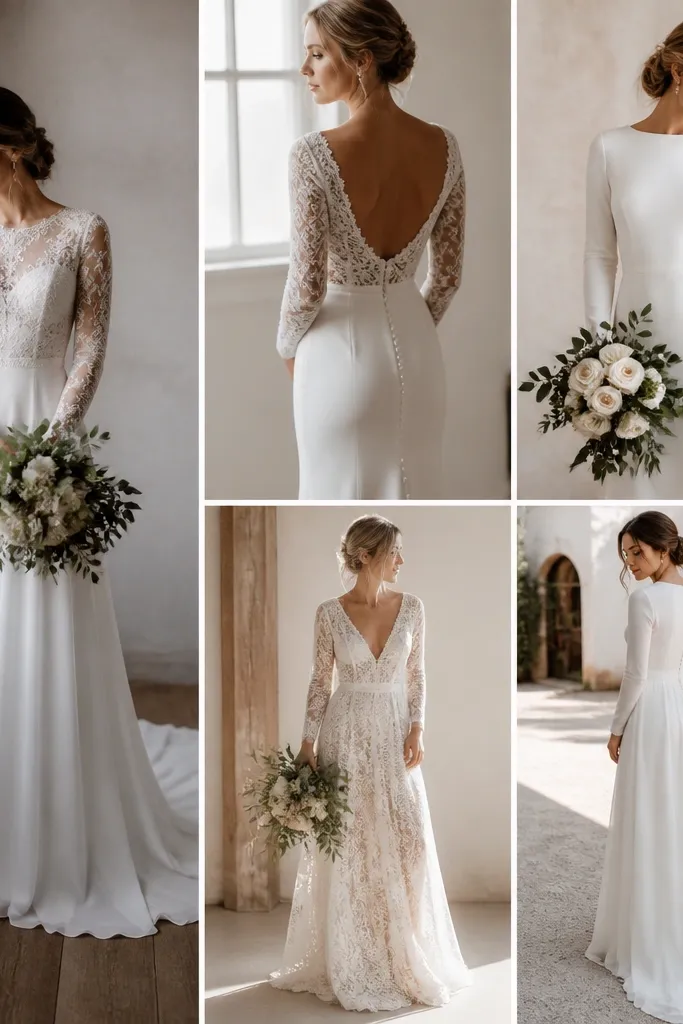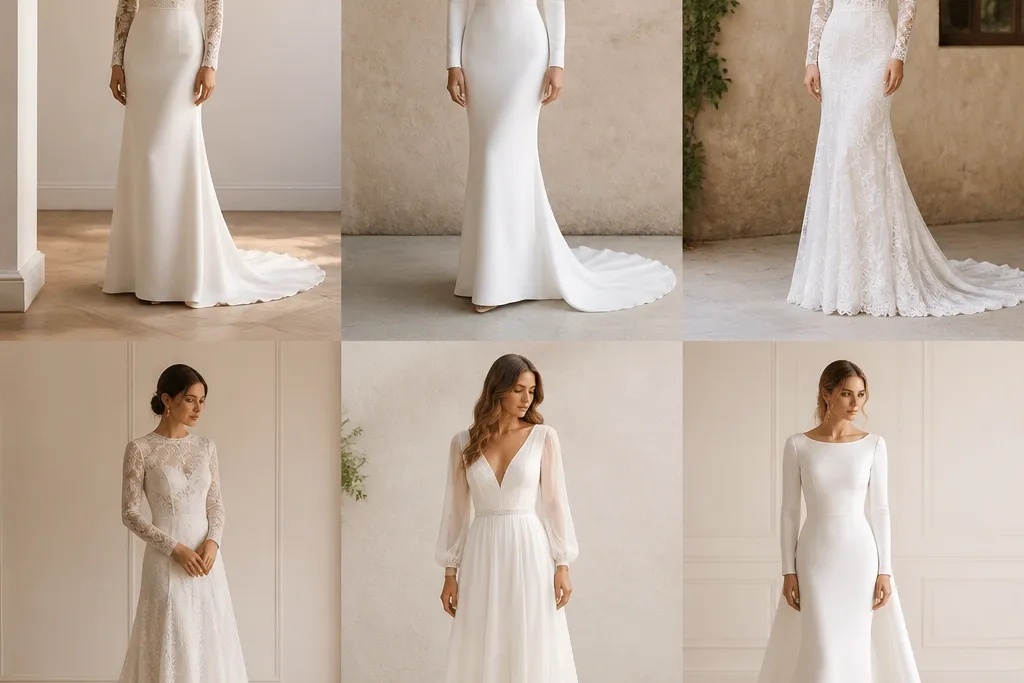
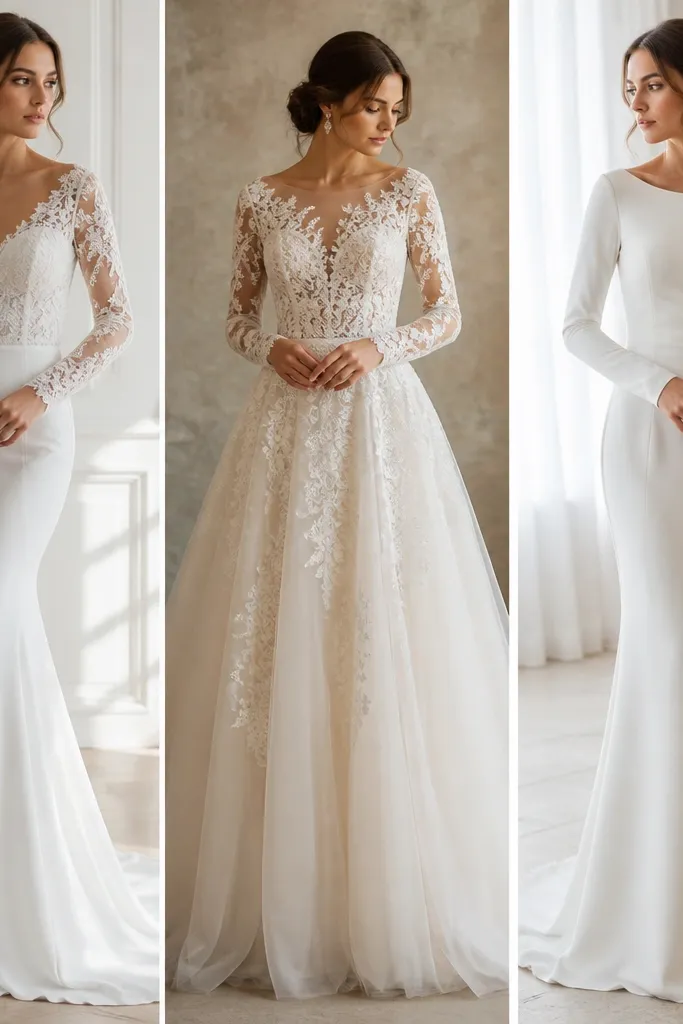
1. Classic Chantilly Lace Long Sleeves (Soft-Edge Scallops)
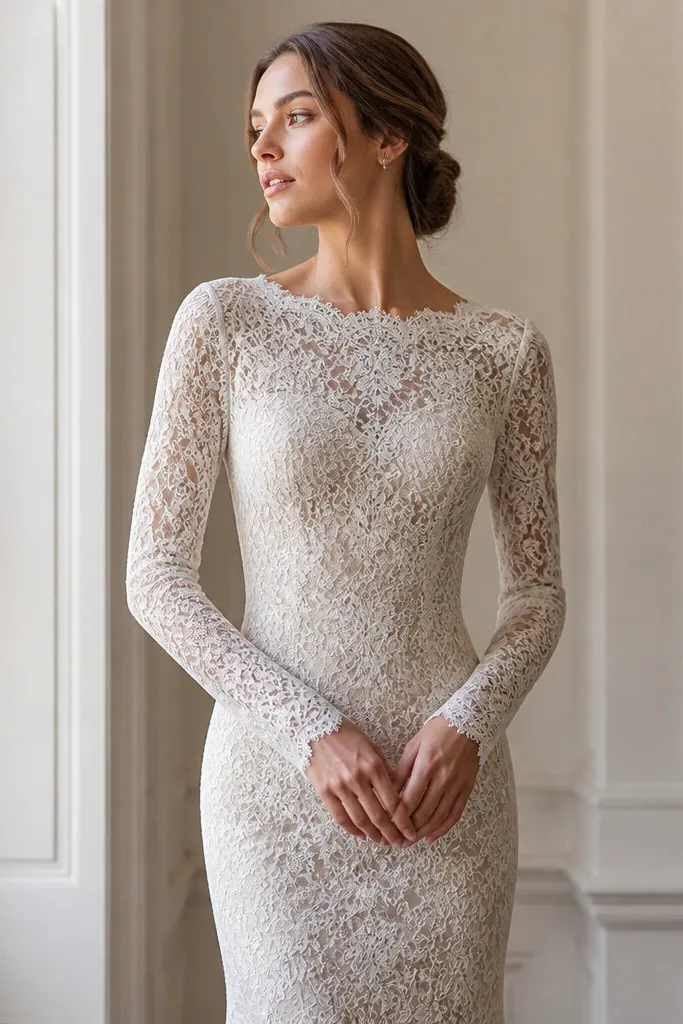
Chantilly lace creates dimension without needing heavy beading, which makes it ideal for close-up photos. The key is the lining — a nude or skin-tone mesh underlayer keeps the sleeves from feeling scratchy and prevents see-through that looks uneven in bright lighting. For Wedloria-style fits, scalloped cuffs help the sleeve end look intentional instead of “unfinished.”
Good to knowAsk what the lace is lined with (mesh vs satin lining) and choose a lining that matches your skin undertone for smoother coverage.
2. Alençon Lace + Crepe Body Combo (Texture on Top, Flow Below)
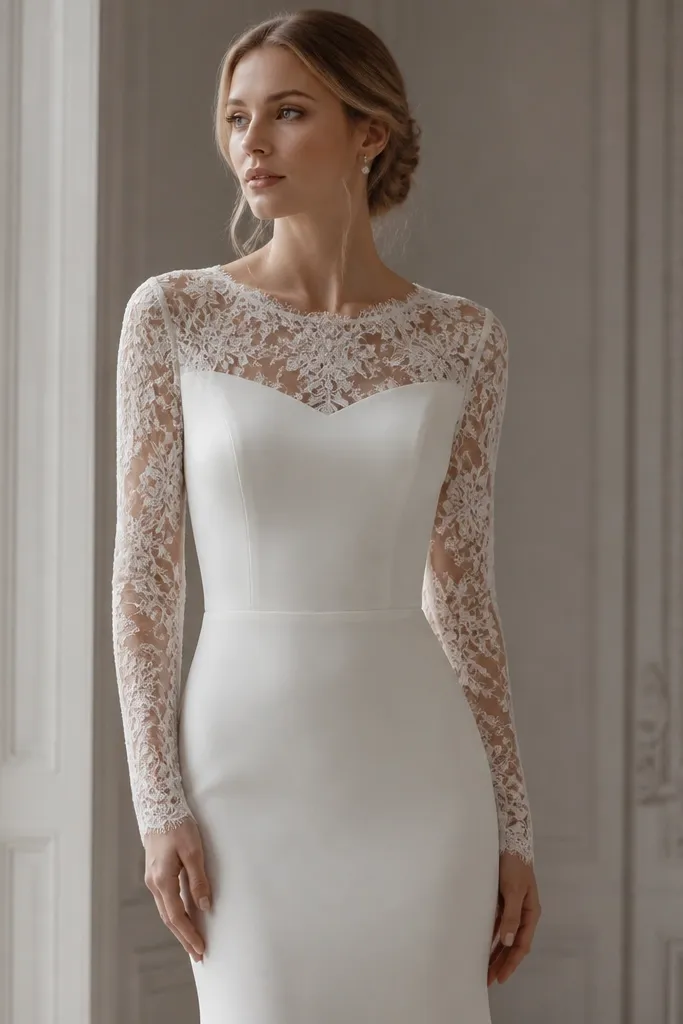
This hybrid approach gives you the romantic lace effect where your camera focuses — sleeves and neckline — while the crepe base keeps movement effortless. Crepe’s matte finish reduces the “shimmer mismatch” that can happen when lace is paired with glossy satin. If you’re worried about lace stiffness during photos-to-dinner transitions, this pairing usually feels more flexible.
Good to knowChoose a crepe with slight stretch if you plan to sit, eat, or dance — it reduces sleeve strain and pulling at the underarm.
3. Satin Long Sleeve with Straight-Cut Cuff (Clean Minimalist Finish)
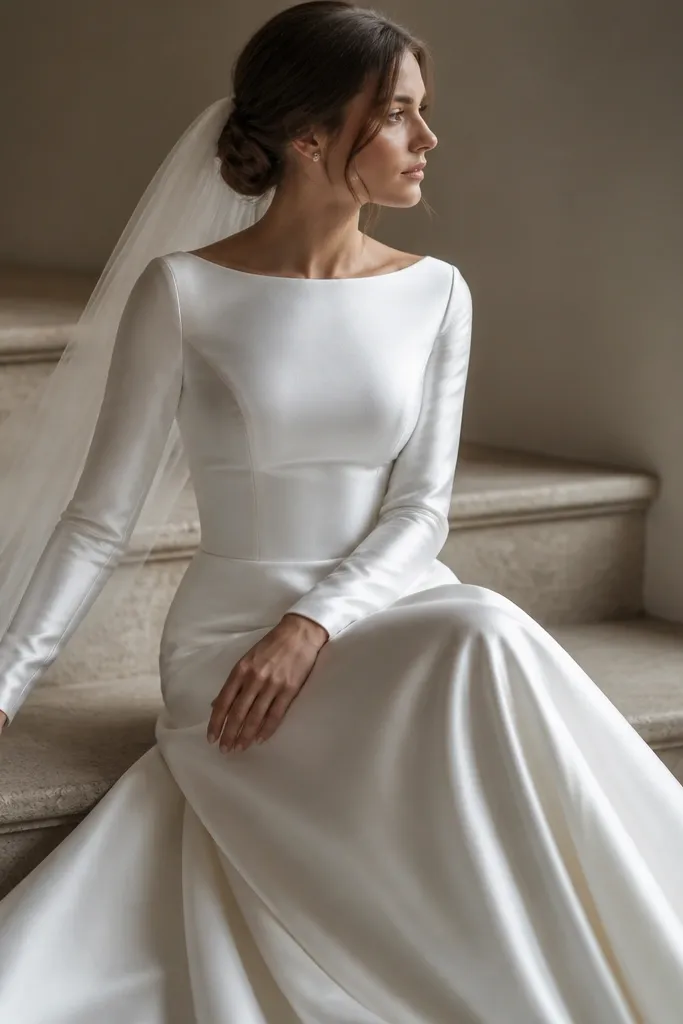
Satin looks expensive because it catches light in a controlled way, especially on long sleeves where the eye follows the line. A straight-cut cuff makes the sleeve look tailored and reduces bunching at the wrist. The tradeoff is that satin can show creases and water spots, so it needs careful steaming and fast handling after trying it on.
Steam from the inside with a low setting and hang it immediately after steaming to prevent new fold lines.
4. Matte Satin Long Sleeves (No-Glare Outdoor-Friendly)
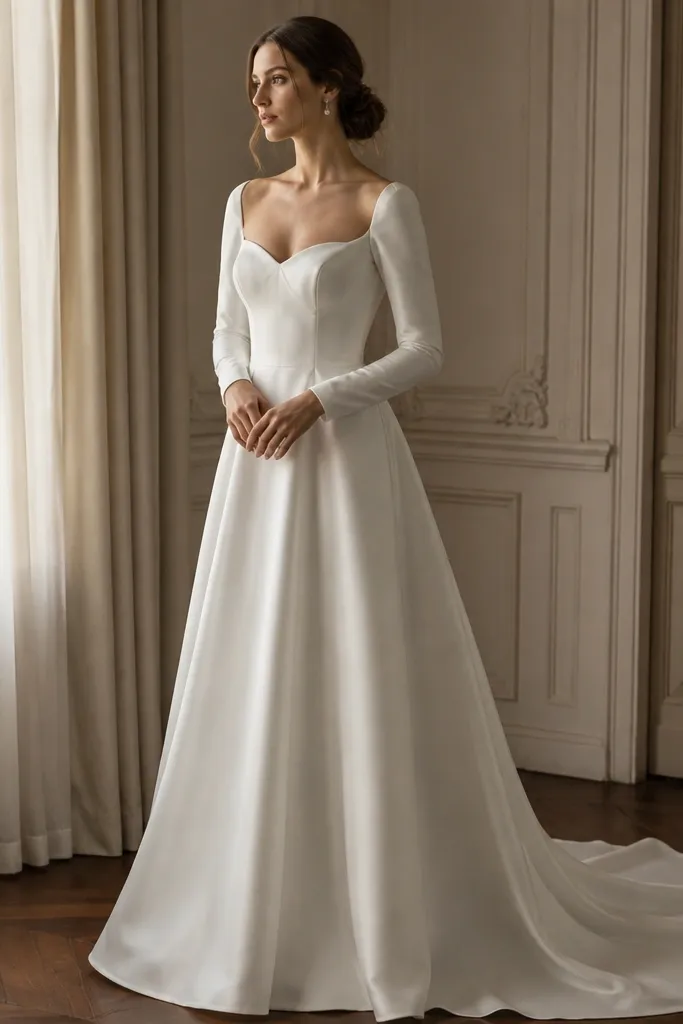
Matte satin keeps the smooth, elevated look while reducing glare — helpful for daylight ceremonies and photos near windows. Because it’s less reflective than high-shine satin, it also hides tiny wrinkles better during a full day. Pair it with a breathable lining so long sleeves don’t feel clammy in warm venues.
If you’re choosing matte satin, test how it looks under bright outdoor light — matte should stay flattering, not dull.
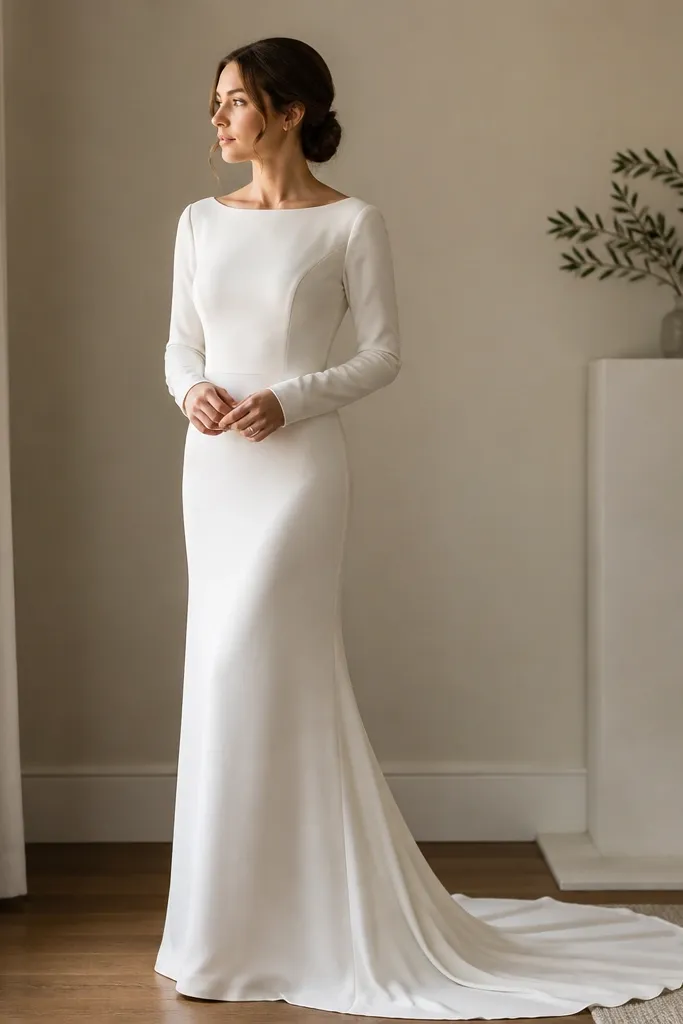
5. Crepe Long Sleeve with Slight Stretch (Drape That Moves)
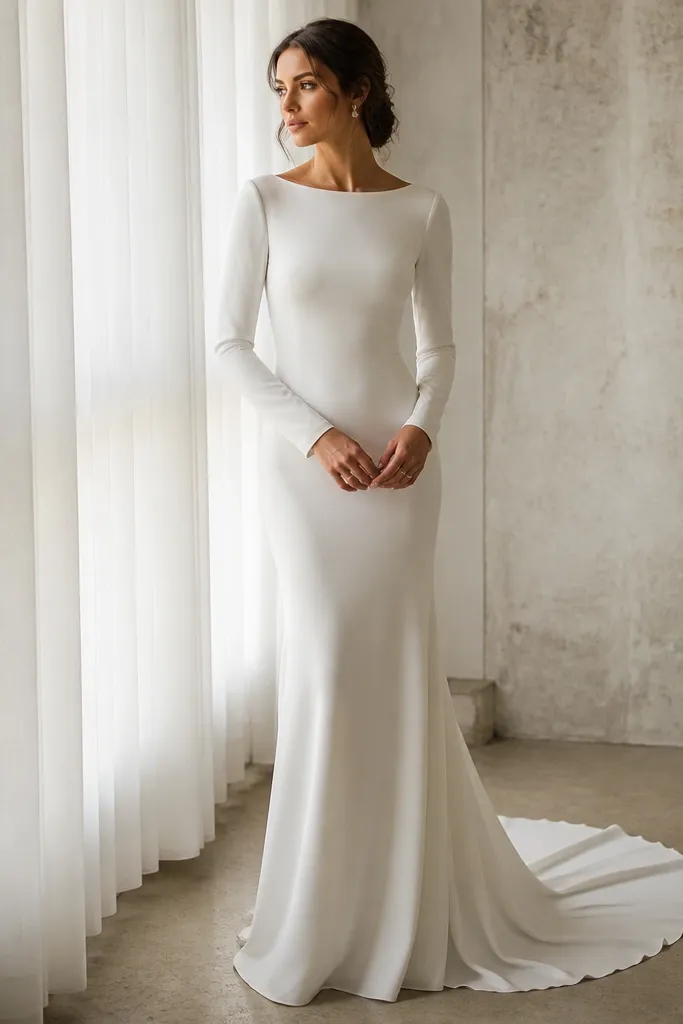
Crepe is the “it just works” fabric for long sleeves because it holds shape while still moving with your body. Stretch crepe improves underarm comfort and reduces that pulling feeling when you raise your arms for photos. The matte surface also makes crepe forgiving — small wrinkles blend in instead of showing like on satin.
Good to knowLook for descriptions like “stretch crepe” or “crepe back satin blend” and check that the sleeve seam sits comfortably at the underarm.
6. Crepe + Lace Overlay Sleeves (Romance Without Bulk)
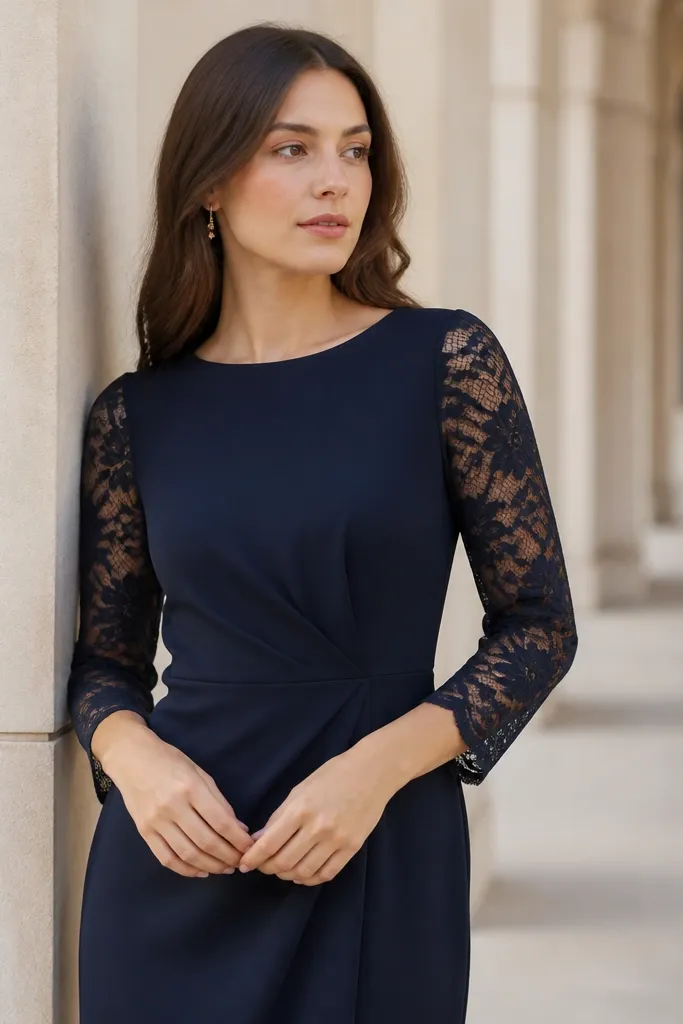
An overlay sleeve gives you lace romance while keeping the sleeve weight lighter than all-over lace. Because the base is crepe, the bodice and skirt move smoothly, so you don’t get the “stiff top, heavy bottom” look. This is especially flattering if you want long sleeve coverage but hate bulk at the upper arm.
Choose an overlay that’s lined to the same opacity level as your bodice so the sleeve doesn’t look darker or lighter in photos.
7. Lace Illusion Neckline + Sleeve Illusion Panel (Balanced Coverage)
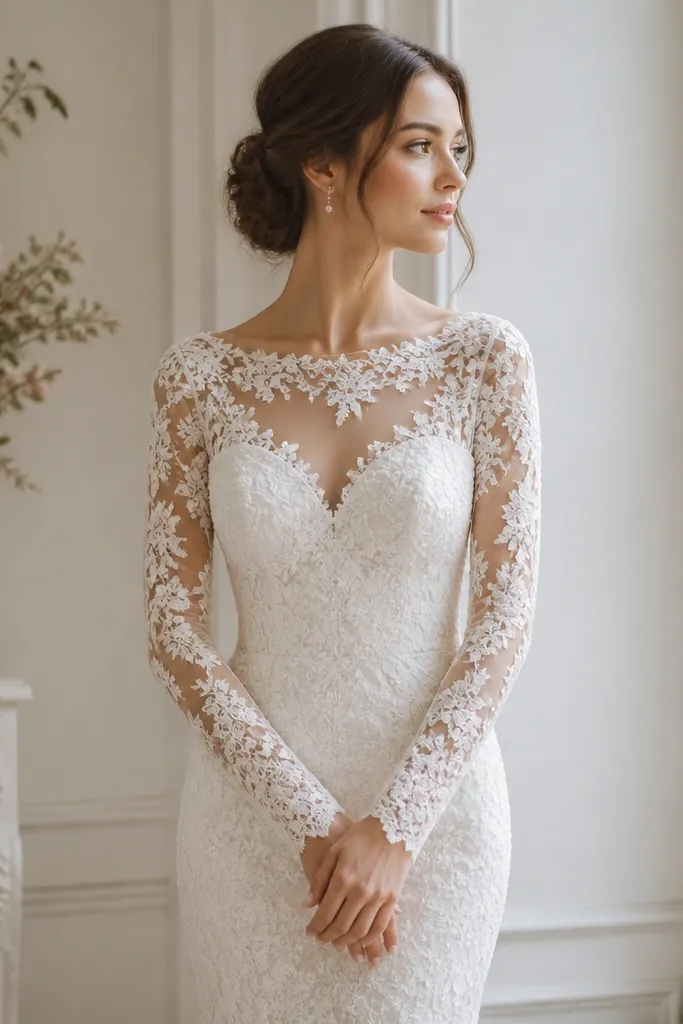
Illusion panels can be gorgeous, but the success depends on matching the nude mesh color to your skin so the sheer area looks intentional. Consistent lace placement along the sleeve prevents a “random patchwork” effect in close-up shots. For comfort, make sure the illusion areas are lined enough to avoid visible pulling when you move.
Good to knowBring a flash phone test to the fitting — if the nude mesh looks too light or too dark, it will show on camera.
8. Satin Sleeve with Hidden Lining (Less Slip, Better Comfort)
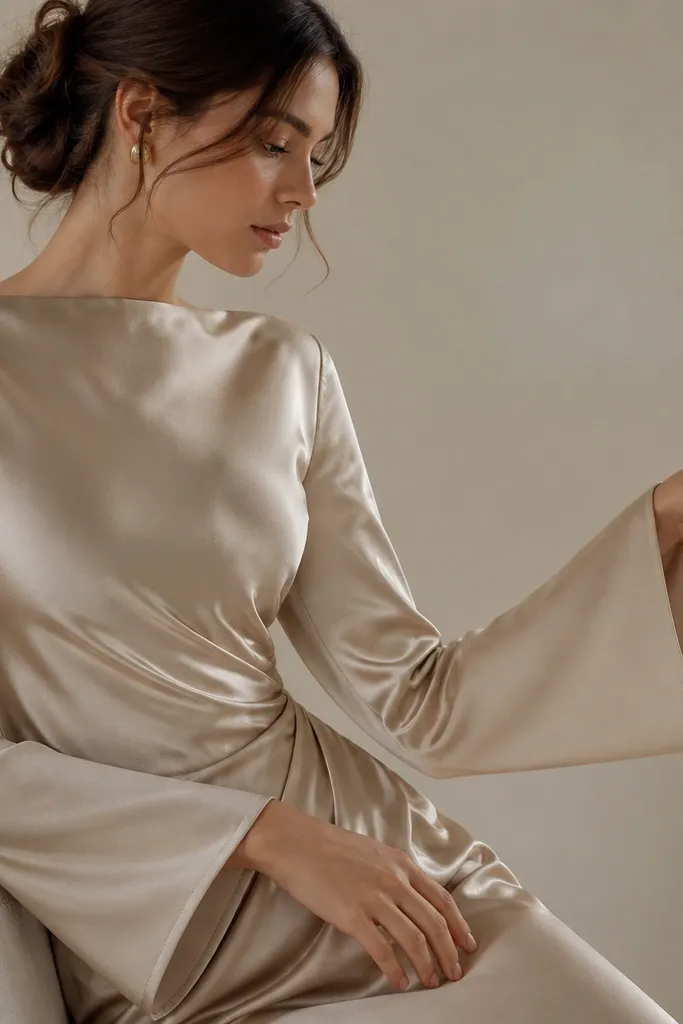
Satin can feel slippery, especially on long sleeves that slide against your arms. A hidden lining (often a soft polyester or satin-backed fabric) helps the sleeve stay in place and reduces friction that can cause irritation. This also improves how the sleeve drapes when you sit, so the fabric doesn’t cling at the elbow.
Good to knowWhen trying it on, move your arms across your body — if the sleeve twists or slides, look for a lined sleeve or add a discreet inner grip tape.
9. Crepe Sleeve with Clean Seam Placement (No Underarm Pull)
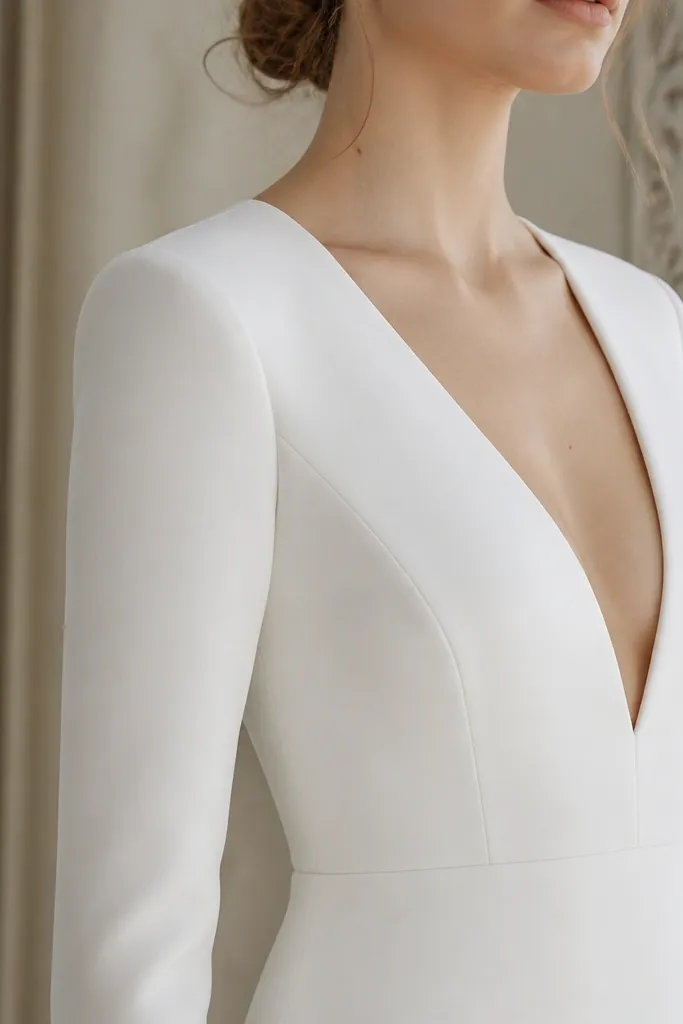
Crepe shows its quality through seam behavior — clean armholes and correctly placed sleeve seams prevent the underarm pull that makes long sleeves uncomfortable. When the seam sits right, you get a smooth line from shoulder to cuff without puckering. This matters most for long sleeve fits because every movement amplifies small construction issues.
Good to knowCheck how the sleeve looks when your hands are at your sides and when you lift them — puckering at either point is a fit red flag.