1. Sleeves Too Short at the Wrist (Bunching in Photos)
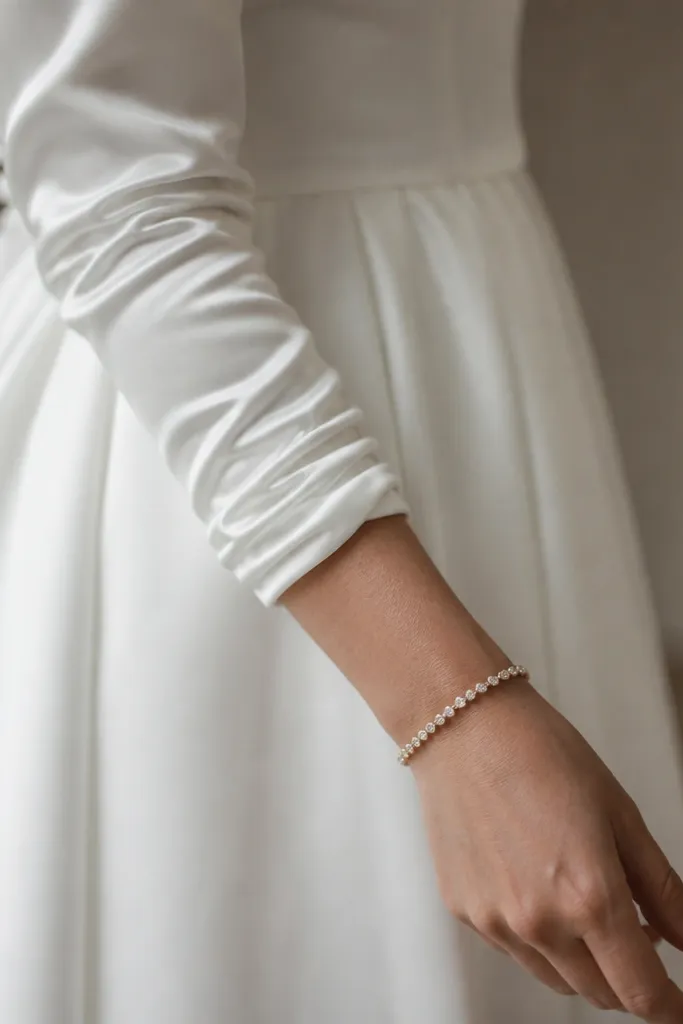
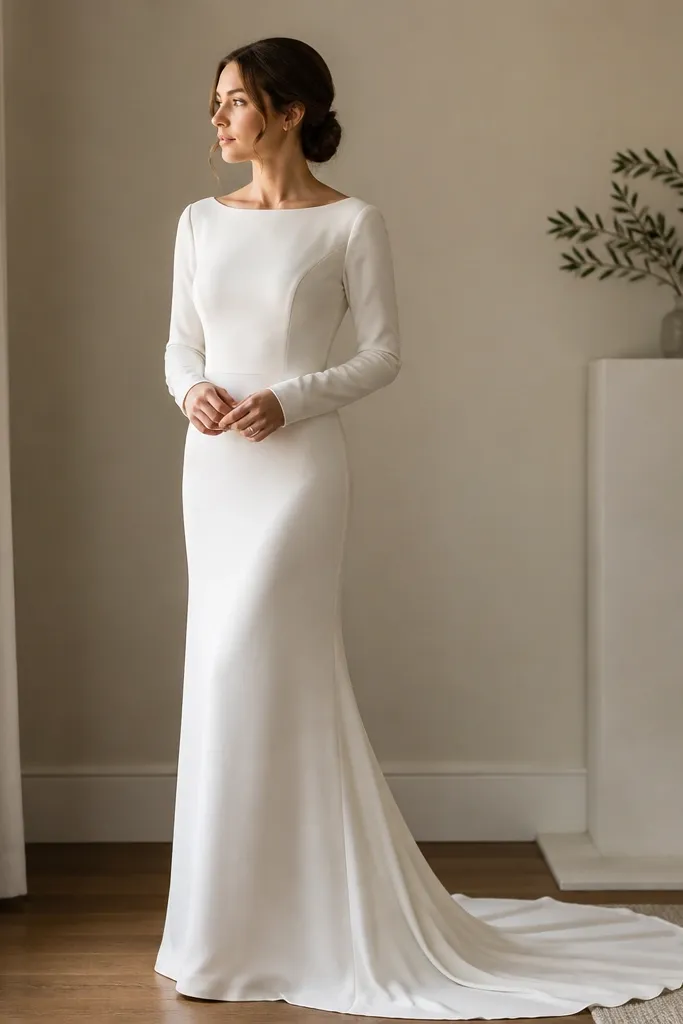
This mistake happens when the sleeve length is set for a different posture — most people stand and gesture differently during a ceremony. The extra fabric gathers near the wrist and catches light in close-up photos, making the sleeve look “unfinished.” Look for sleeves that end at your natural wrist bone or slightly below, depending on your cuff style.
Measure sleeve length while wearing the same bra/undergarments and shoes you’ll use on the wedding day, then add a quick 2-minute “arm test” by raising your hands like you’re holding a bouquet.
2. Sleeves Too Long (Drag on Your Hand)
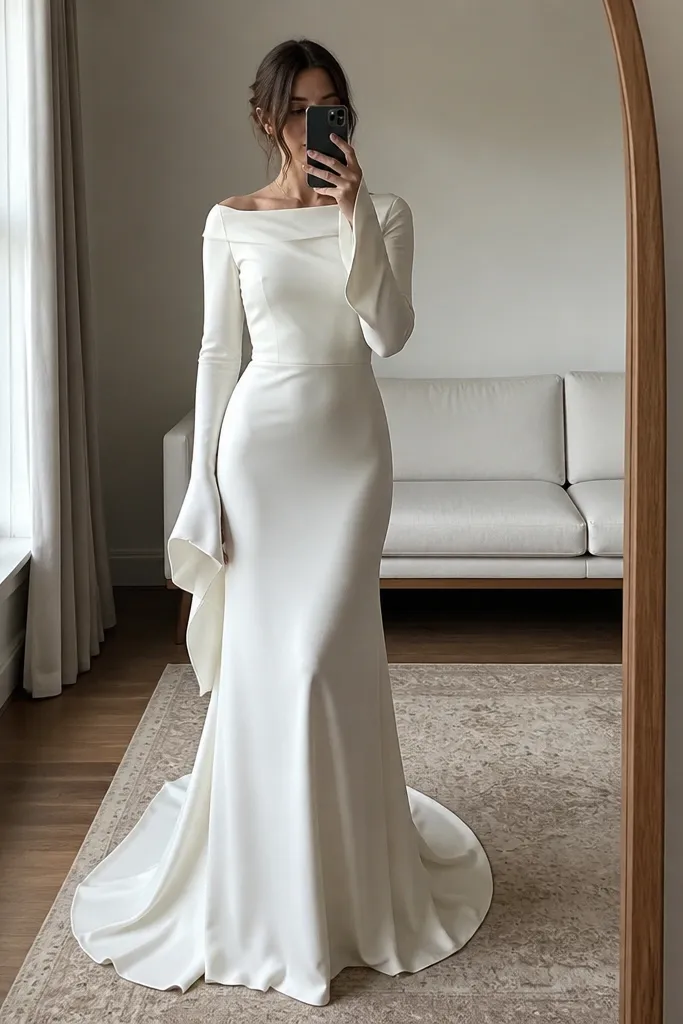
Overlong sleeves can feel fine in the fitting room but start to drag once you walk, sit, or hold a bouquet. That drag creates creases that won’t steam out easily on the day. It also makes your hands look smaller or “cluttered” in photos because the sleeve becomes the focal point.
Good to knowWhen trying dresses on, walk 10 steps, sit, and gently wave your hands. If the cuff passes your wrist crease, plan for a sleeve shortening before final tailoring.
3. Wrong Sleeve Width (Tight Over the Bicep, Loose at the Wrist)
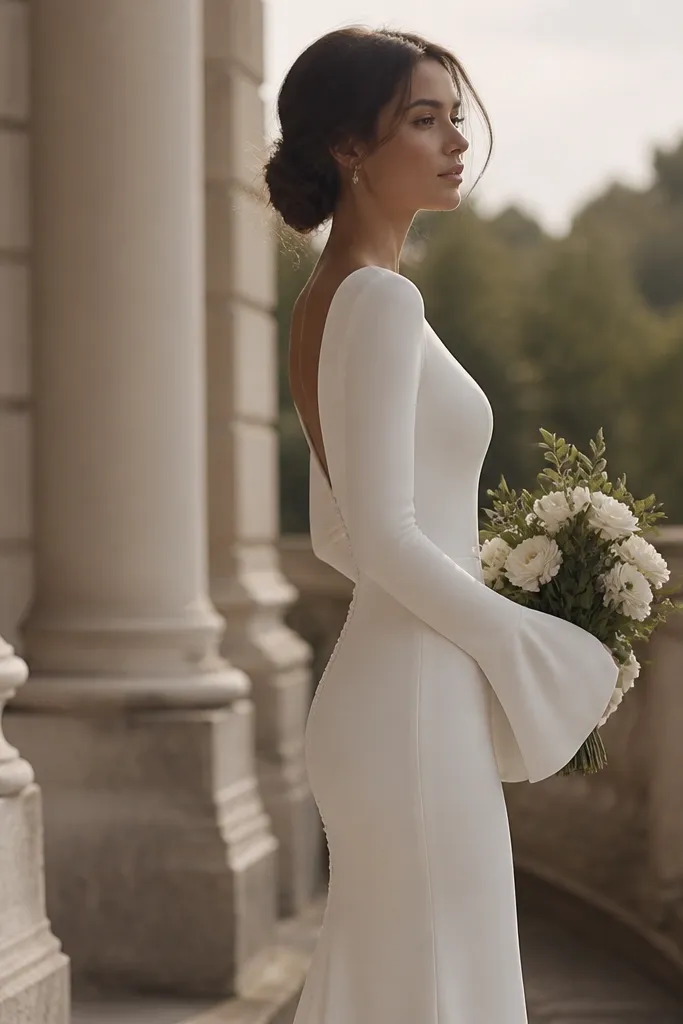
This is a pattern/fit issue, not just a sizing issue. Tightness over the bicep can pull the seam line upward when you move, while looseness at the wrist makes the sleeve look disconnected from the rest of the arm. The result is a sleeve shape that looks “off” even if the dress fits everywhere else.
Good to knowCheck the sleeve seam position: it should sit near your natural shoulder seam. If the bicep feels compressed, ask for a small pattern adjustment at the upper sleeve, not just the cuff.
4. Neckline Clashing With Sleeve Style (Janky Proportions)
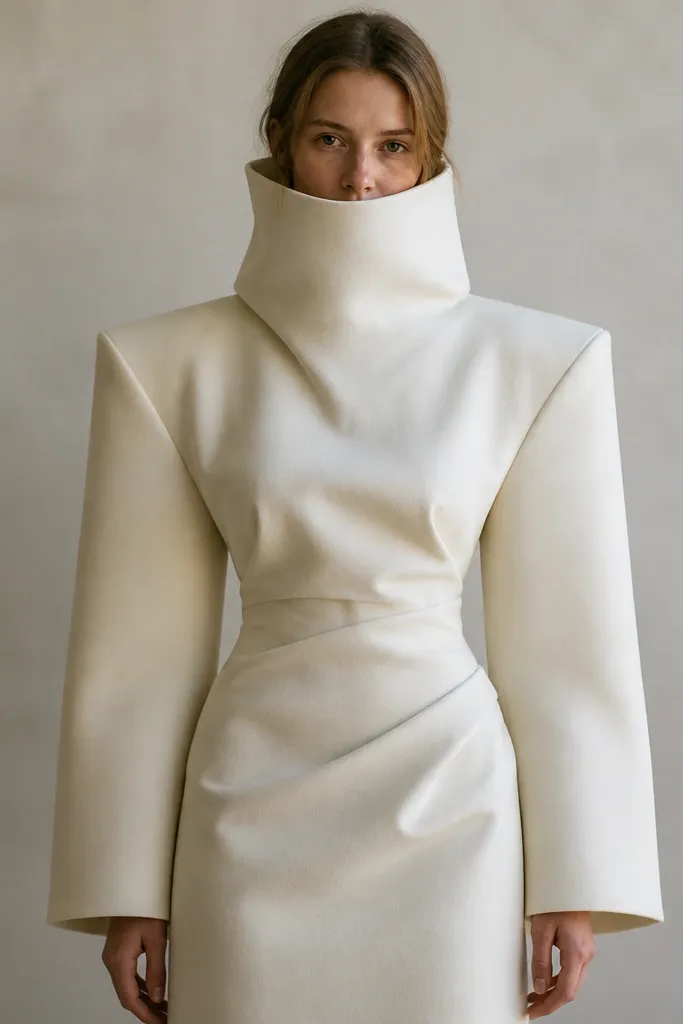
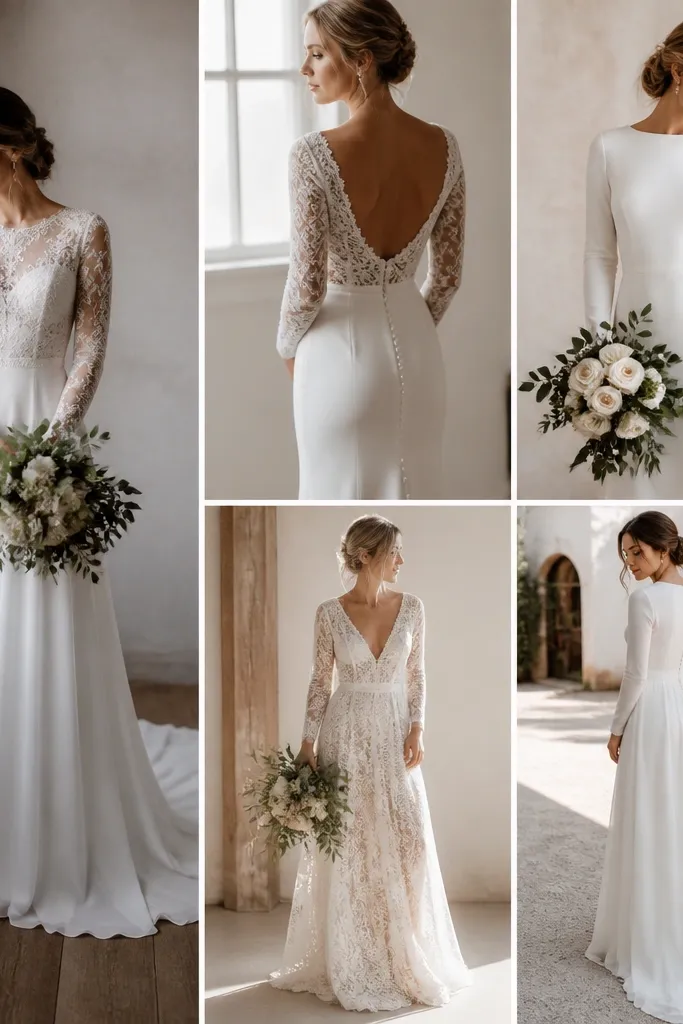
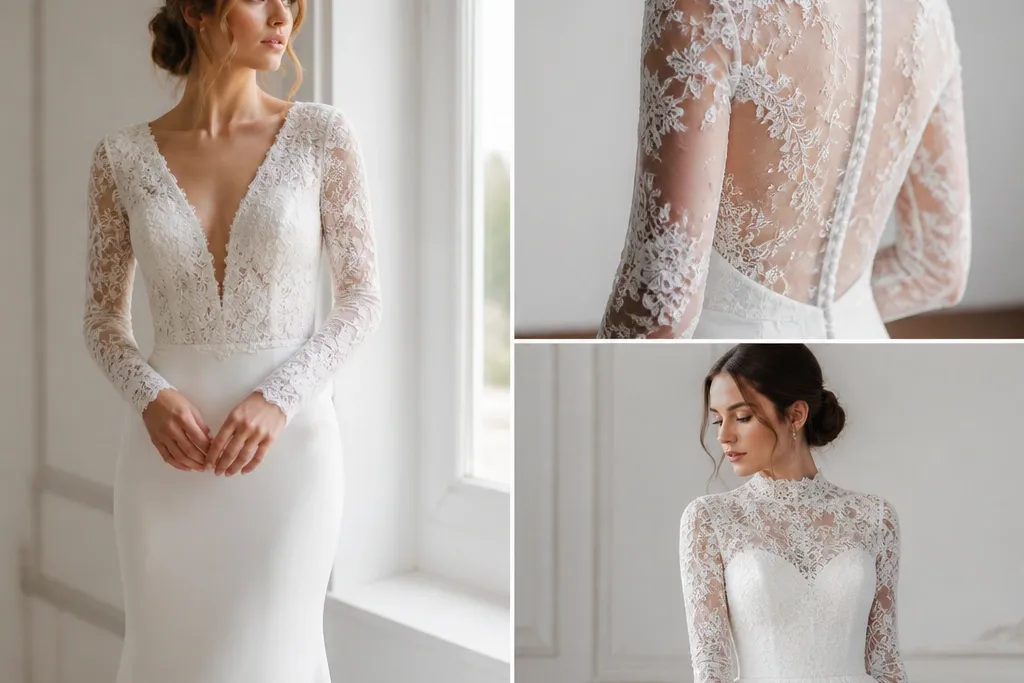
When a high neckline meets a stiff, heavy sleeve, the whole upper half can feel visually “blocked.” Photos can look top-heavy, and your face may appear smaller because the silhouette doesn’t create a natural vertical line. It’s especially noticeable with lace sleeves or thick lace appliqué.
Try the dress with your intended veil or hairstyle. If the collar feels crowded, consider a softer neckline fabric (light illusion mesh) or a slightly lower neckline option.
5. Sheer Illusion That Shows Bra Lines (Instant Regret)
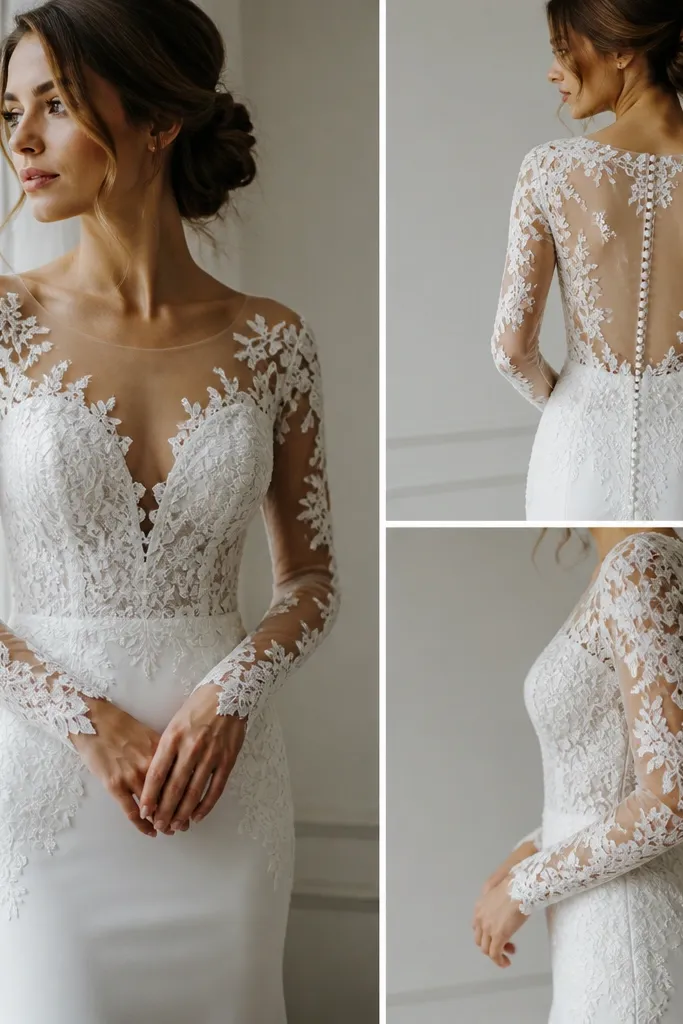
Illusion mesh can look romantic in store lighting but reveal bra lines under flash. This is one of the most common long sleeve wedding dress mistakes because people don’t test under direct light. The problem gets worse if the dress has lace with open motifs over a sheer base.
Good to knowBring your actual bra and take a few quick selfies in bright flash. If you see lines, switch to a strapless/longline nude option or add a discreet lining panel under the illusion area.
6. Lace Placement That Hits the Wrong Point on Your Arm
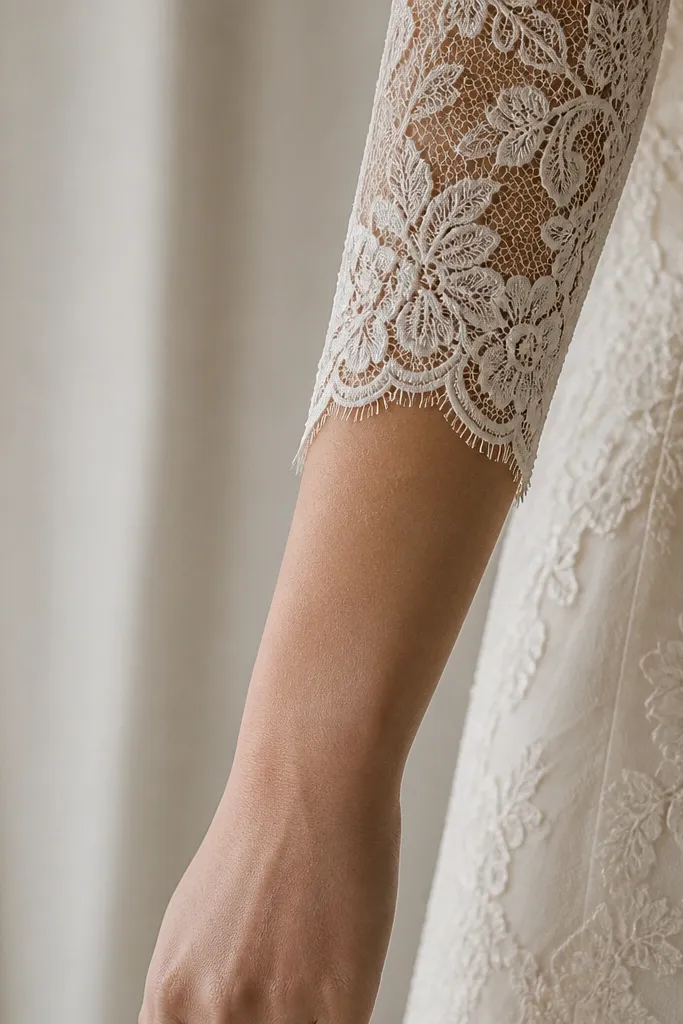
Lace is beautiful, but motif placement matters. If the densest lace band sits at the widest part of your arm or mid-forearm, it can create a visual “cut” that makes your arm look broader in photos. This is especially true with all-over lace sleeves that don’t taper.
Good to knowLook for a sleeve design where the lace density gradually changes or tapers toward the cuff. If you love the dress, ask whether the seamstress can shift the sleeve lace panel slightly during alterations.
7. Fabric That Clings When You Lift Your Arms

Some crepe, satin, or lightly lined jersey blends look smooth standing still but tighten with movement. During vows, photos, and dancing, you’ll lift your arms and the fabric reveals texture lines. You want sleeves that drape, not snap back into cling.
Good to knowDo the “arm raise test” in the fitting: lift your arms to chest height and check for pulling. If you see tension lines, choose a thicker lining or a fabric with more structured drape.
8. Cuff Details That Catch on Jewelry
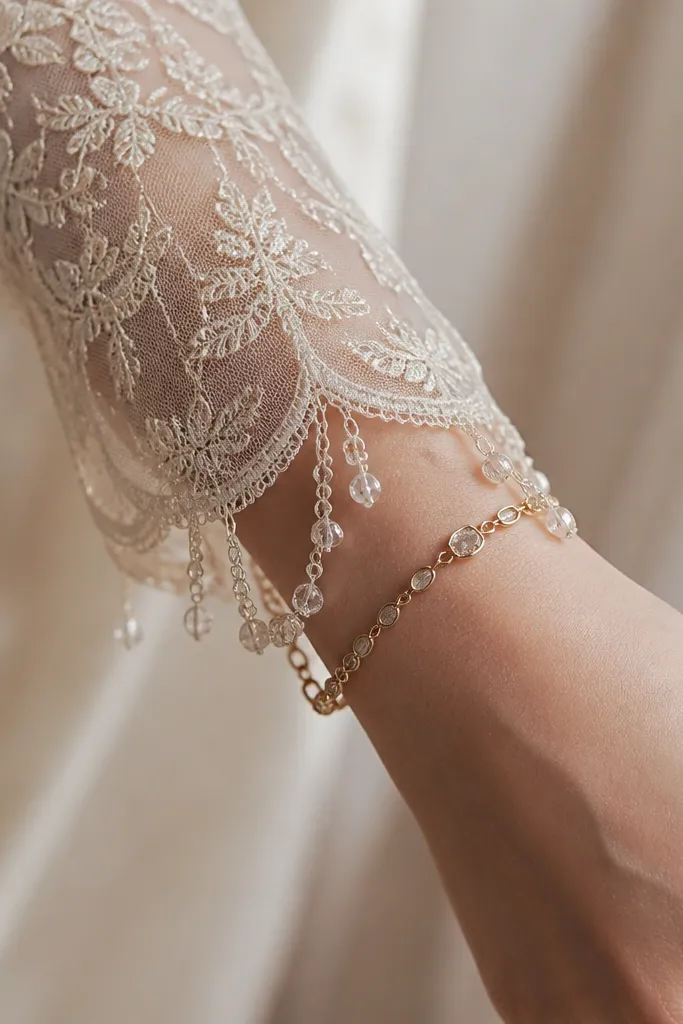
Cuffs with beading, buttons, or rough lace edges can rub against bracelets or watches. That can create tiny pulls in the fabric and distract you all day. In close-up photos, it also looks messy if the cuff twists or shifts from friction.
Good to knowIf you plan to wear a bracelet, test the cuff overlap. Choose a smoother cuff lining or opt for a bracelet that sits below the cuff edge.
9. Buttons or Seams That Twist on One Side
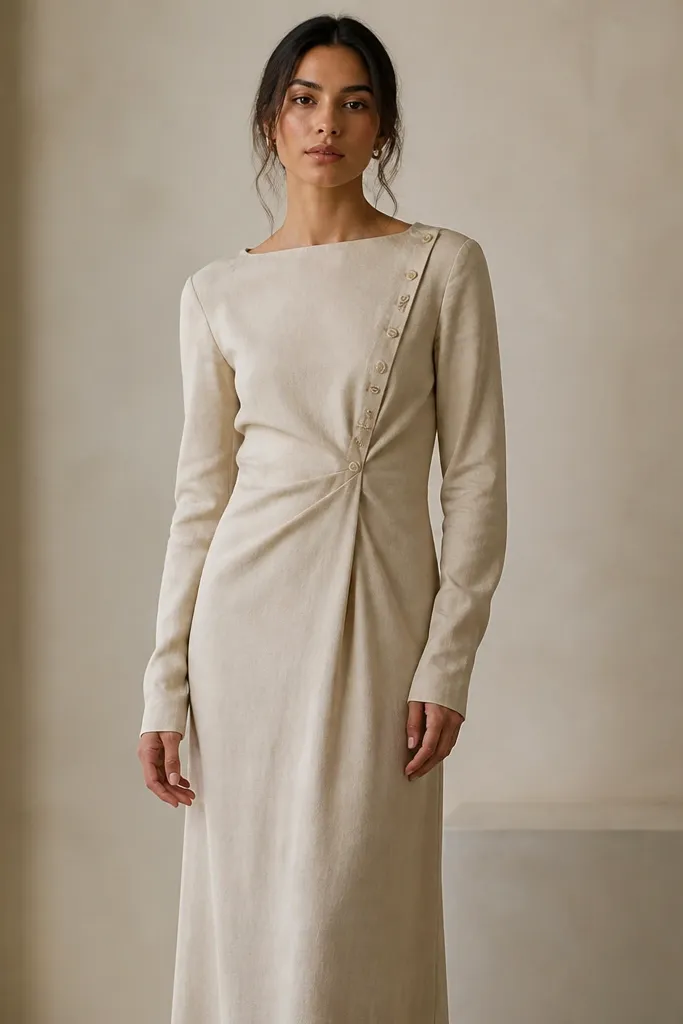
Asymmetry can happen when sleeve pitch or armhole angle isn’t aligned to your body. Even a half-inch mismatch becomes obvious in photos because long sleeves draw the eye along the arm line. Buttons can also rotate the sleeve fabric, making the seam look crooked.
Wear the dress and stand naturally. If one sleeve twists, ask for a sleeve pitch adjustment — not a full replacement — during tailoring.
10. Sleeves With No Movement Ease (Feels Restrictive)
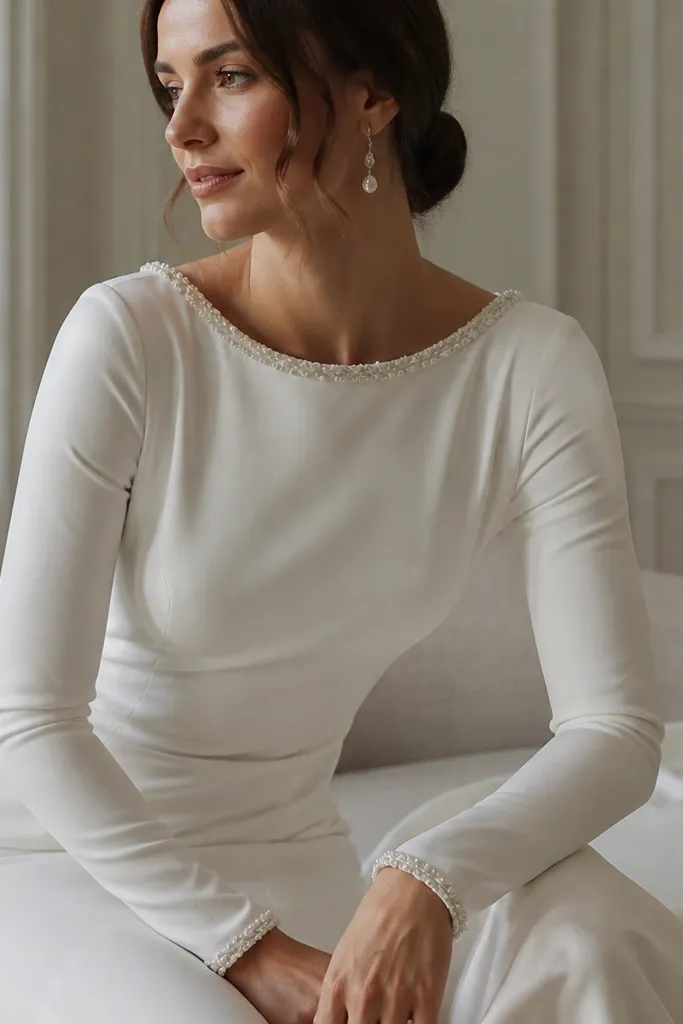
Even beautiful fitted sleeves can be uncomfortable if the pattern lacks ease. The elbow tension shows up in photos and can also restrict your ability to hold the bouquet, adjust veil, or dance. You want smooth movement without “pull lines” across the sleeve.
Sit down in the dress and do a gentle reach forward. If the sleeve wrinkles sharply at the elbow, request a small gusset or add ease at the elbow seam during alterations.
11. Overly Heavy Sleeves That Make the Dress Feel Top-Bulky
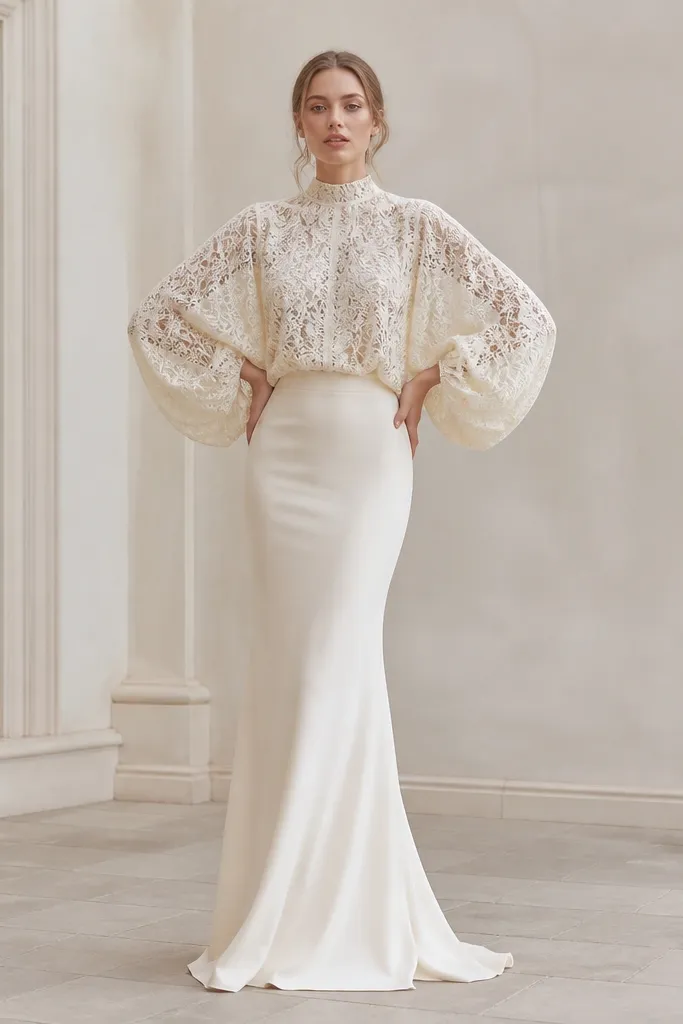
Heavy embroidery or thick lace can create a “frame” effect. If your skirt is airy or fitted, the contrast can make the upper body feel disproportionately bulky in photos. It’s one of those long sleeve wedding dress mistakes that only shows once you see the whole silhouette.
Balance volume: if sleeves are heavy, keep the skirt lighter (or choose a slimmer sleeve design). Try the dress with the veil and hairstyle to see the real silhouette.
12. Not Planning for Veil + Sleeve Overlap
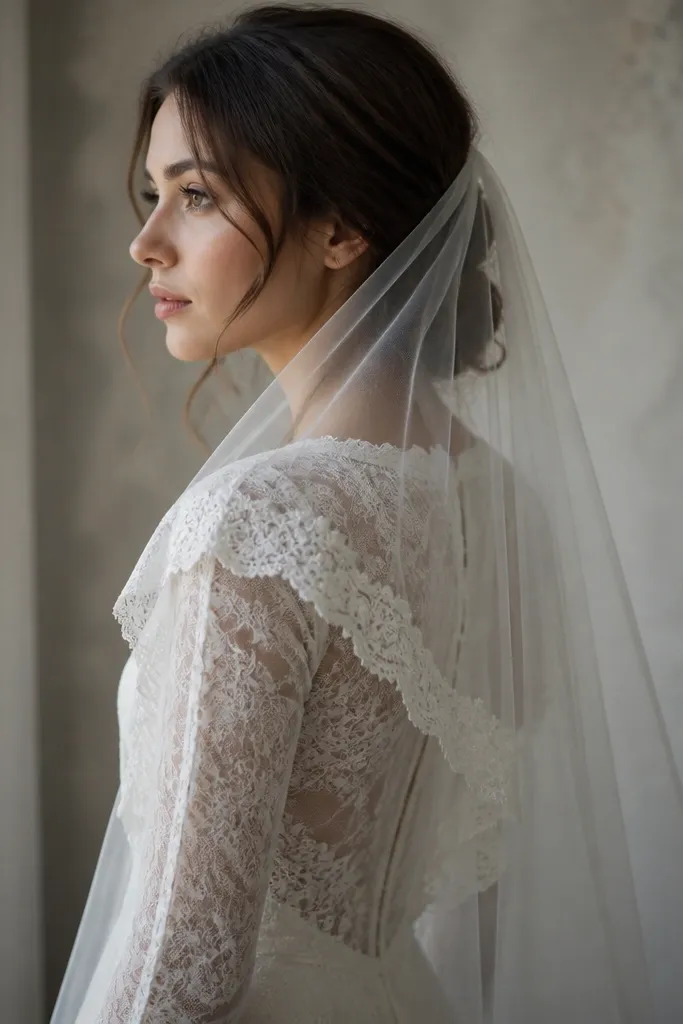
Veils shift throughout the day, and when they overlap lace sleeves, you can get ridges or awkward stacking. The shoulder area becomes visually busy, and flash photos can highlight the seam. This mistake is common when people only test the dress without the full wedding styling.
Good to knowPin your veil placement while wearing the dress and sleeves. If you see a ridge where veil meets sleeve, ask your tailor to smooth the shoulder seam or choose a veil fabric with a softer drape.