1. Shoulder-Safe Jacket Fold (No Shoulder Creases)
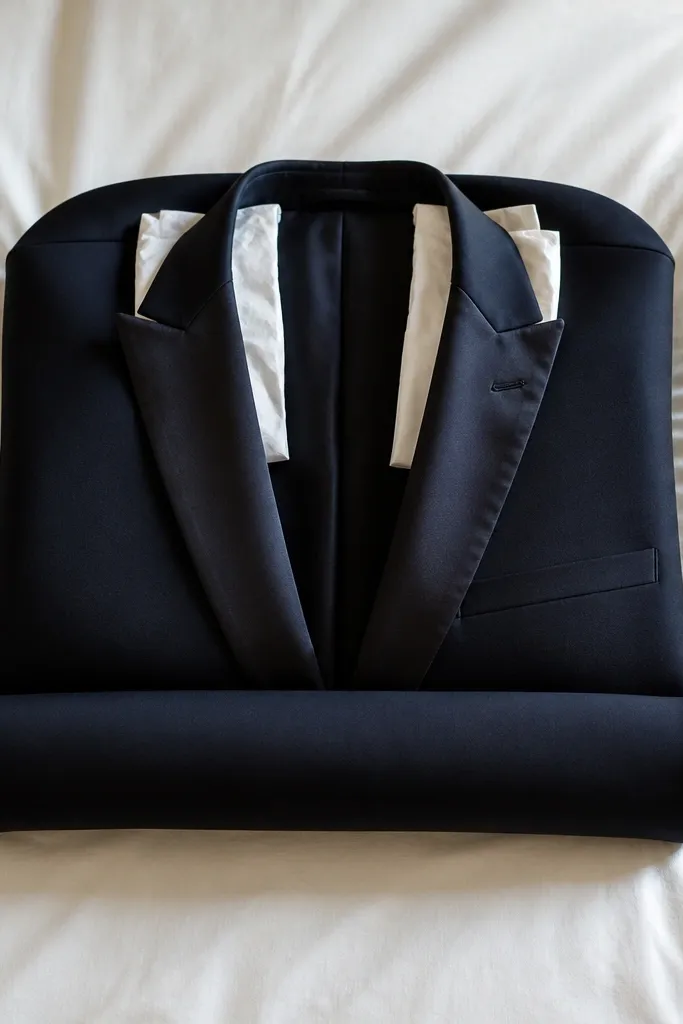
Start with the jacket fully buttoned (or clipped) and smooth the lapels flat so the shape doesn’t “pop” later. Place a thin layer of acid-free tissue or clean cotton cloth under the shoulder area before folding — it acts like a soft spacer so you don’t get sharp shoulder creases in a small bin.
Good to knowFold the jacket in thirds, then place it on top of your trousers so the heaviest seams stay protected at the bottom.
2. Trousers: The “Crease-on-Crease” Fold
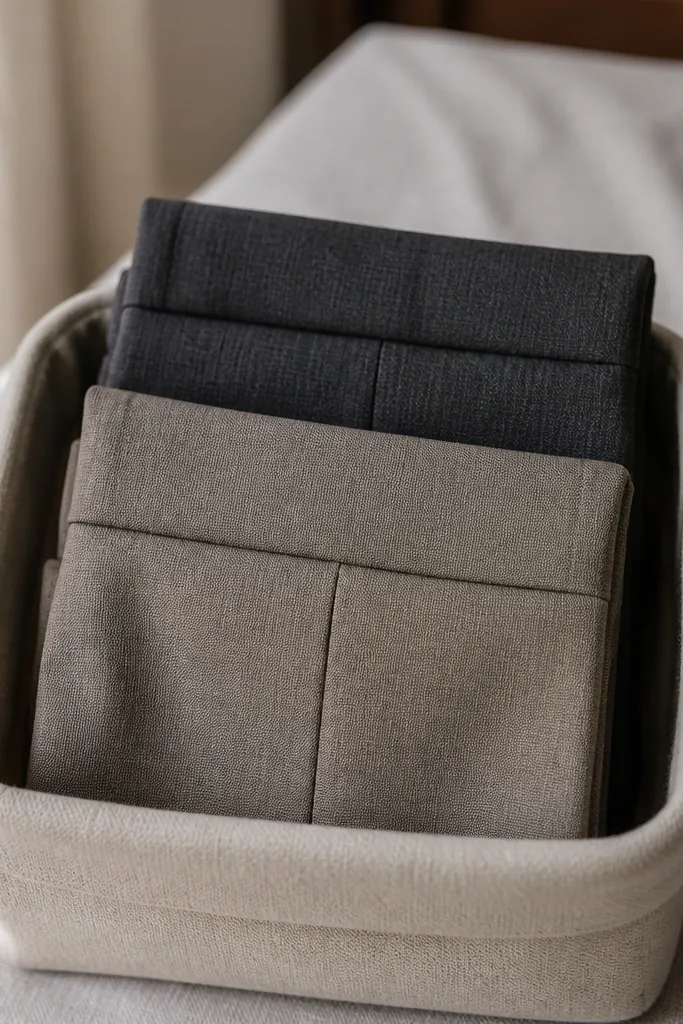
Lay trousers flat and match the factory crease lines before you fold. Fold at the waistband, then bring each leg over so the creases land exactly where they were originally pressed. This reduces the “new crease” look that happens when trousers shift inside a tight space.
Add a thin sheet of parchment or a clean, dry cotton sheet between jacket and trousers to prevent friction marks.
3. The Under-Bed Bin Layout (Jacket on Bottom, Accessories on Top)
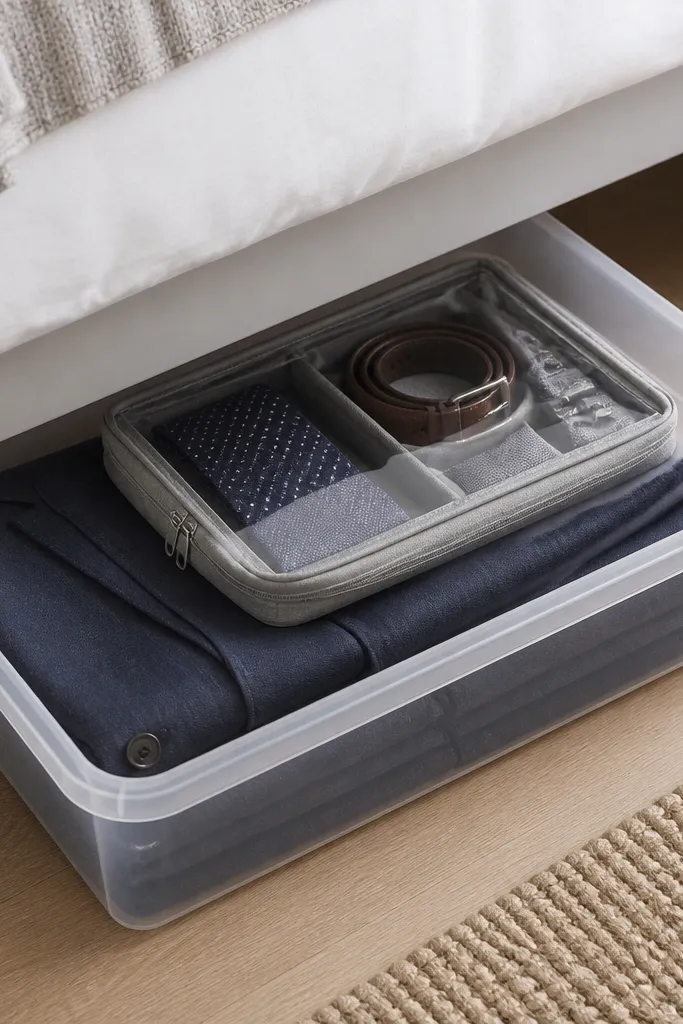
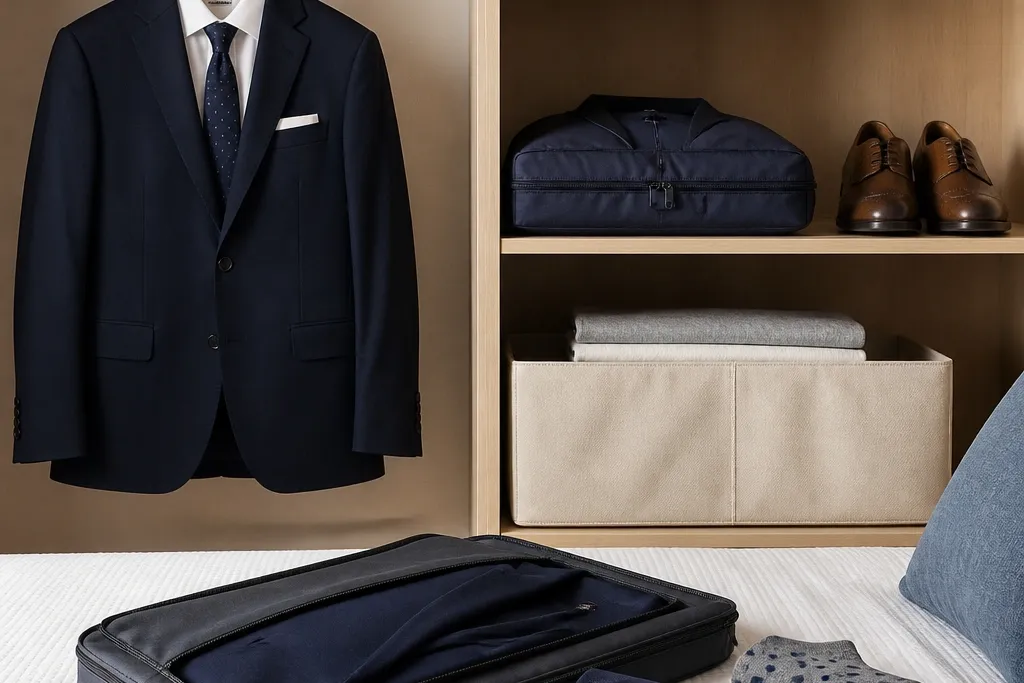
In small spaces, layering is everything. Put the suit jacket and trousers on the bottom layer where the bin is most stable, then top it with lightweight items in a separate zip pouch so nothing heavy presses into the fabric. Label the pouch “Groom Day Grab Bag” so you don’t dig around and knock the suit loose.
Good to knowChoose a bin with a flat base and at least 8-10 inches of depth so the jacket doesn’t get forced into a tight bend.
4. Garment Bag That Actually Works in Small Rooms
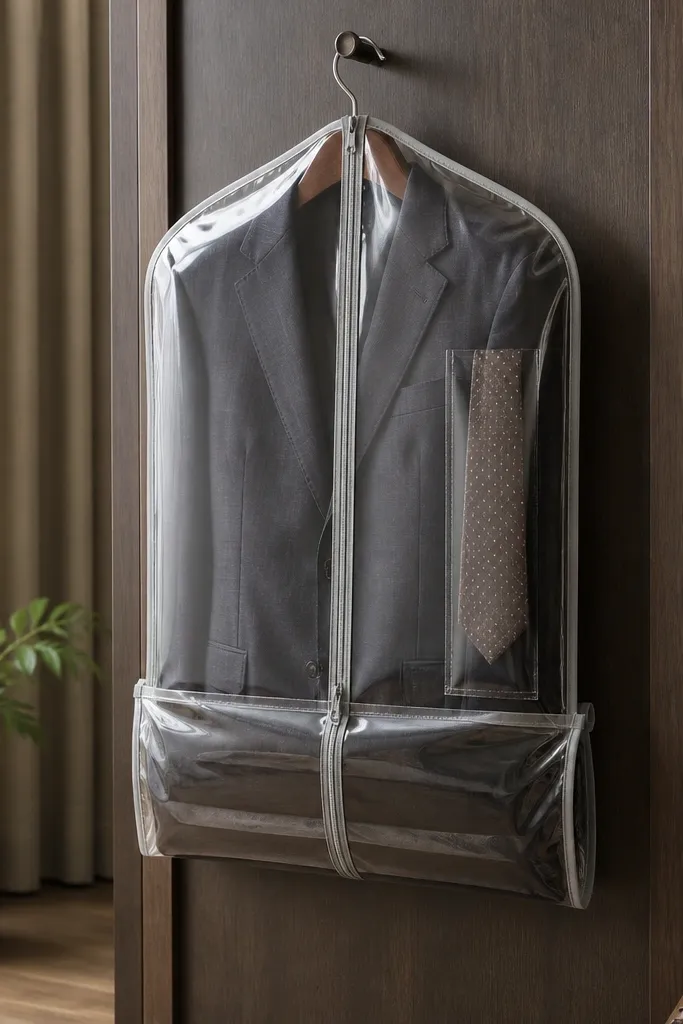
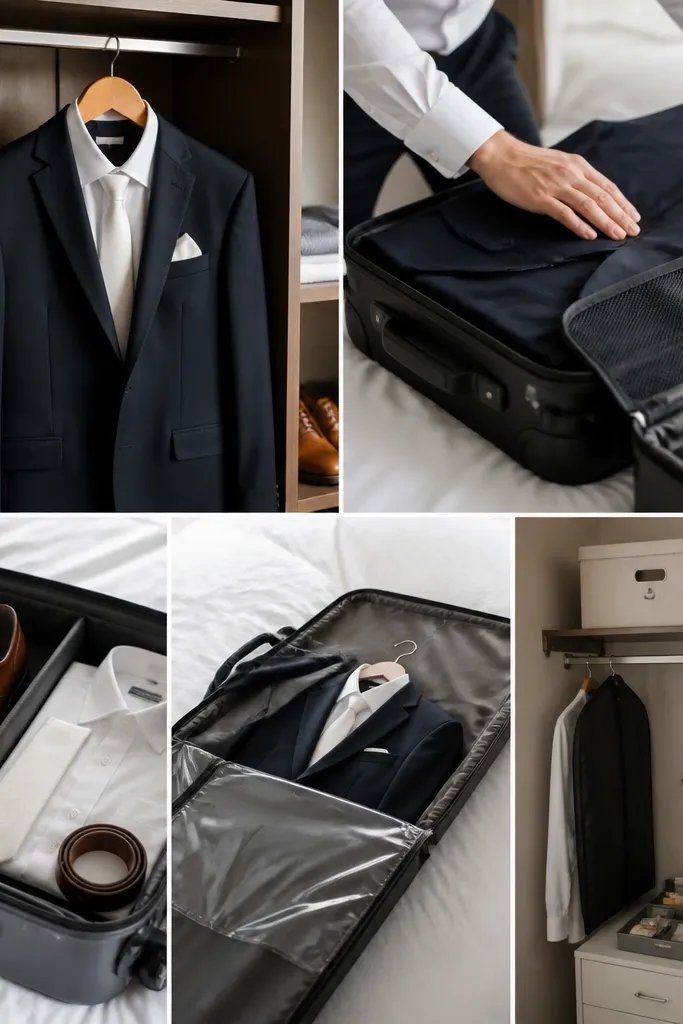
A standard garment bag helps when you have even a little hanging space. If you can’t hang it full length, fold the bag at the bottom edge to reduce how much space it takes, then keep the suit inside with light padding so it doesn’t compress. Clear bags also let you confirm what’s inside without opening it repeatedly.
Good to knowVentilate the bag for 30 minutes before sealing if the suit is fresh from steaming — trapped moisture can cause odor.
5. Tie Storage: The “Roll + Pin” Method
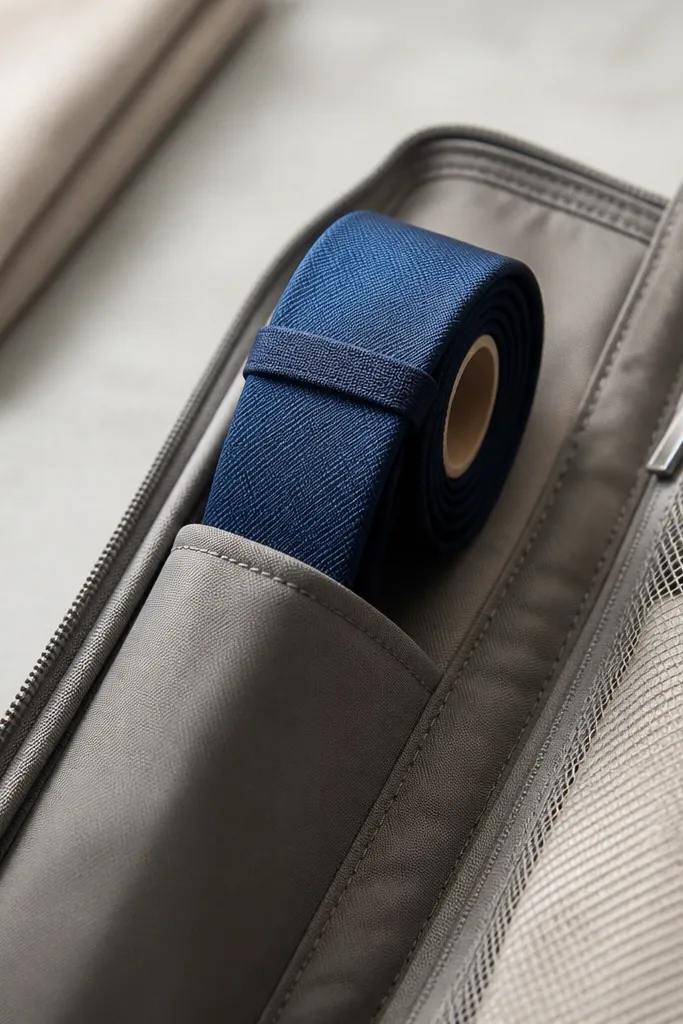
Ties crease easily, especially silk blends. Roll the tie from the wide end toward the tip, keeping the roll snug but not tight enough to deform the knot area. A small pin-through-fabric holder or a soft fabric strap keeps the roll from unraveling in transit and storage.
Good to knowStore ties in a vertical pouch or side pocket so they don’t get crushed under the jacket.
6. Belt and Shoes: Keep Them Separate to Avoid Smells and Bends
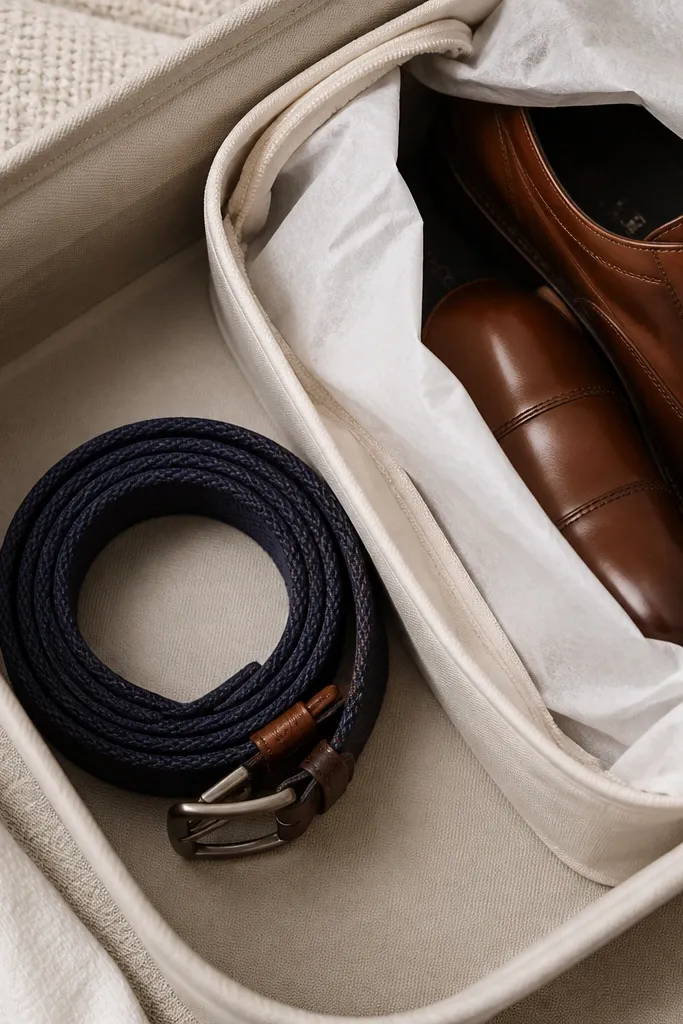
Belt texture and shoe materials can transfer odors and scuffs if they sit directly against your suit. Coil the belt flat and strap it; then keep shoes in a separate shoe bag or wrap them in tissue so the bin doesn’t become one hard pressure zone. This also prevents the suit fabric from being pulled when you lift shoes out later.
If your shoes are newly broken in, let them fully air out overnight before packing.
7. Shirt Packing: Fold Like a Book, Not a Letter
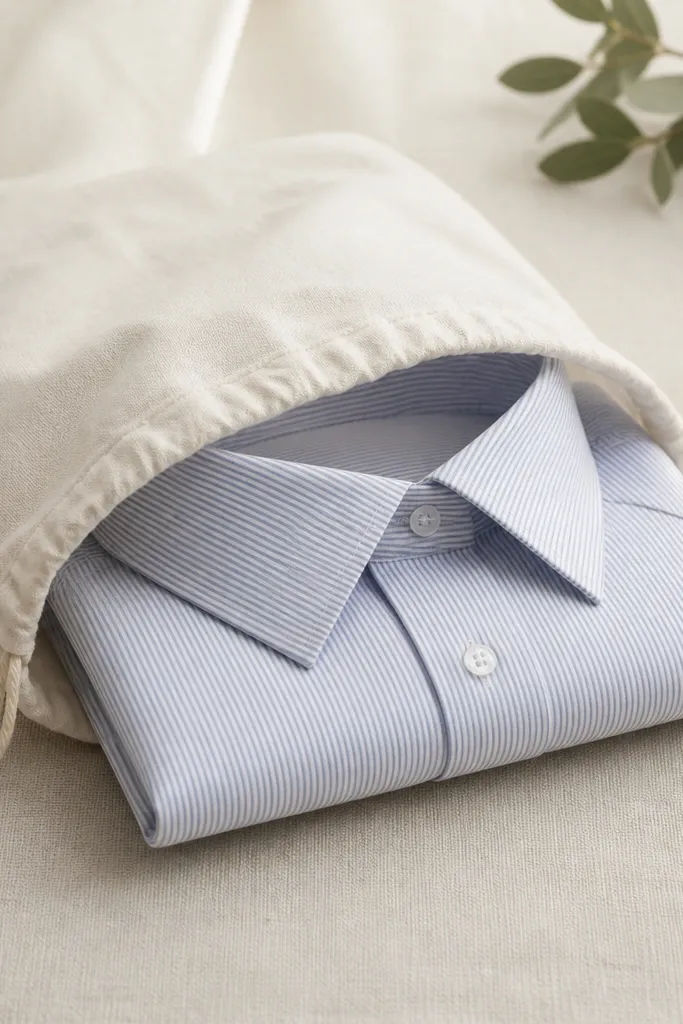
A shirt packed with a “letter fold” creates a ridge that transfers to the suit. Instead, tuck sleeves flat and fold in sections so the front panels lay smoothly. Place the shirt between two layers of clean cotton or a garment sheet so friction doesn’t leave faint surface lines.
Good to knowPack the shirt last — it’s lighter and you can slide it on top without disturbing the jacket fold.
8. Moisture + Dust Barrier for Small Bins
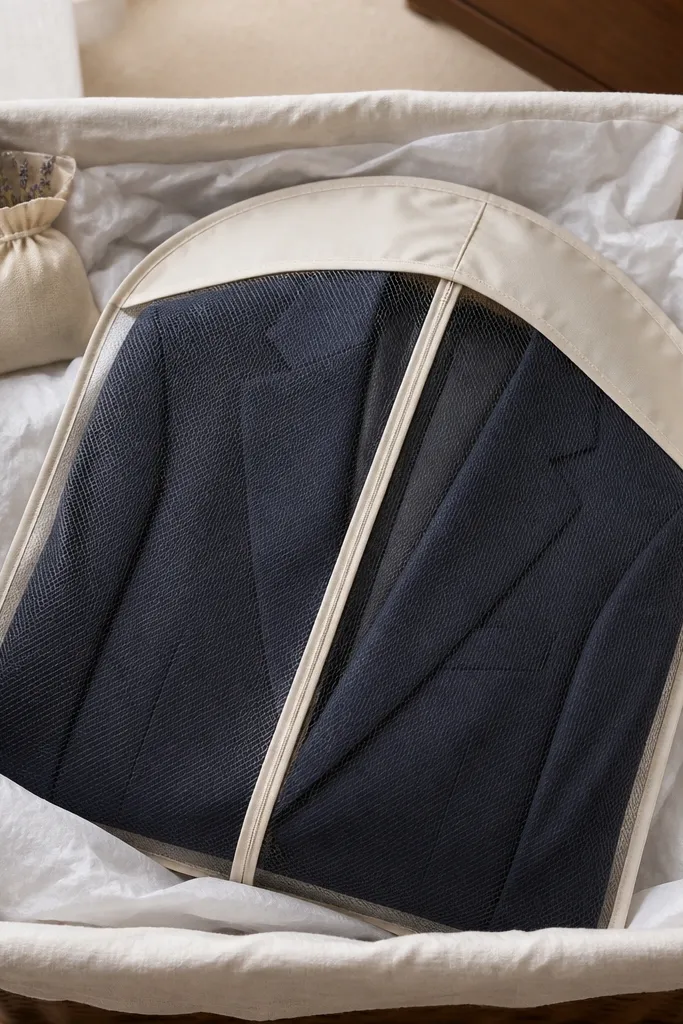
Small spaces often mean basements, closets, or under-bed storage that can be dusty. Use a breathable cotton liner (or muslin) so air can move slightly, and add a fabric sachet to keep the bin smelling fresh. Avoid plastic directly against the suit for long periods because it can trap moisture and create musty odor.
Good to knowReplace sachets every 2-3 months if the bin sits in a humid area.
9. “Wear Order” Packing So You Don’t Reopen the Bin
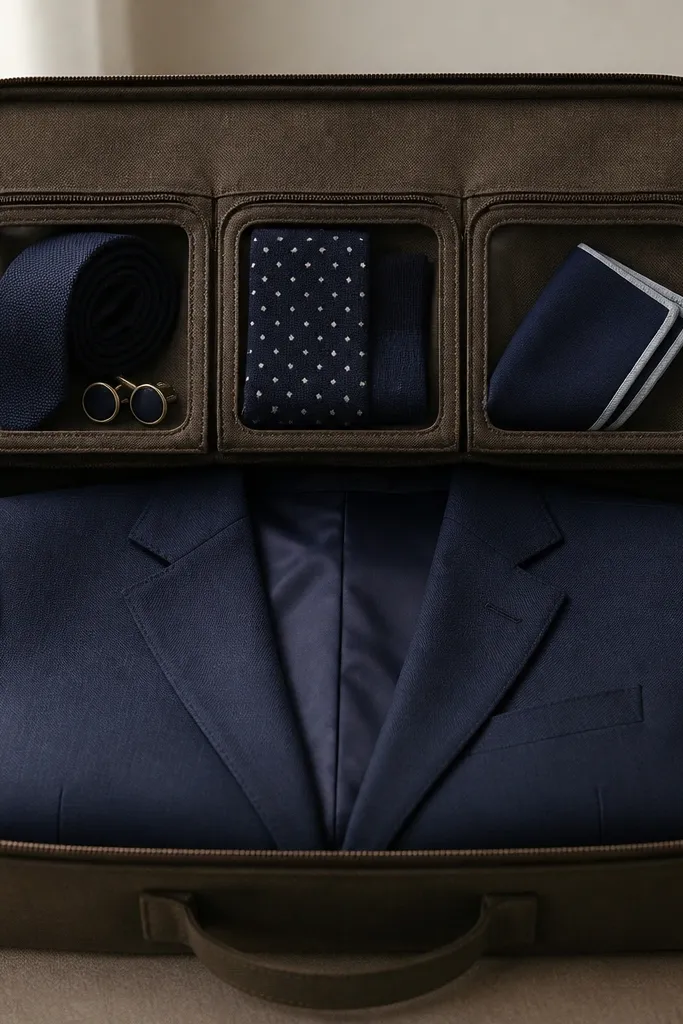
When you pack for a wedding day, the goal is speed. Put items in separate pouches in the order you’ll use them: pocket square and tie first, then cufflinks, then socks and undershirt. This prevents the suit from shifting each time you search for something.
Good to knowTake a quick photo of the bin layout before you close it — it’s a lifesaver on busy morning.
10. Pocket Square Protection: Tissue-Form + Flat Storage
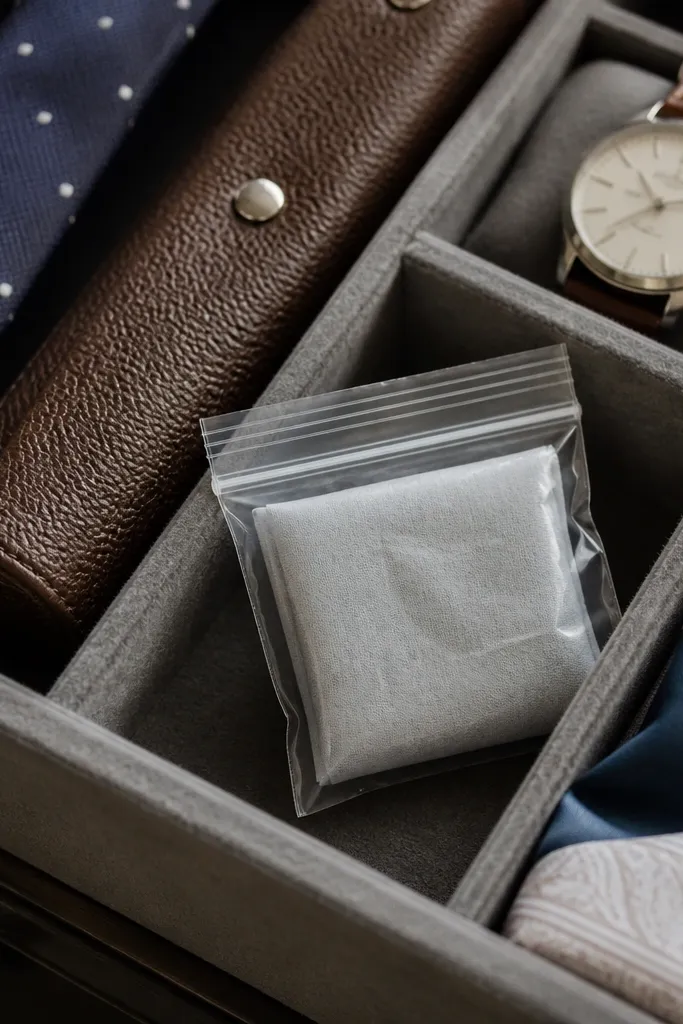
Pocket squares can pick up creases that show even after steaming. Fold your pocket square into the shape you actually plan to wear (classic puff, TV fold, or straight fold), then wrap it lightly in tissue to keep edges crisp. Storing it flat in a mini bag prevents it from being crushed by heavier items.
Don’t place the pocket square directly on the tie — color transfer can happen on darker silks.